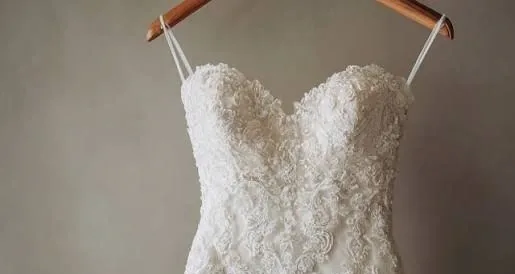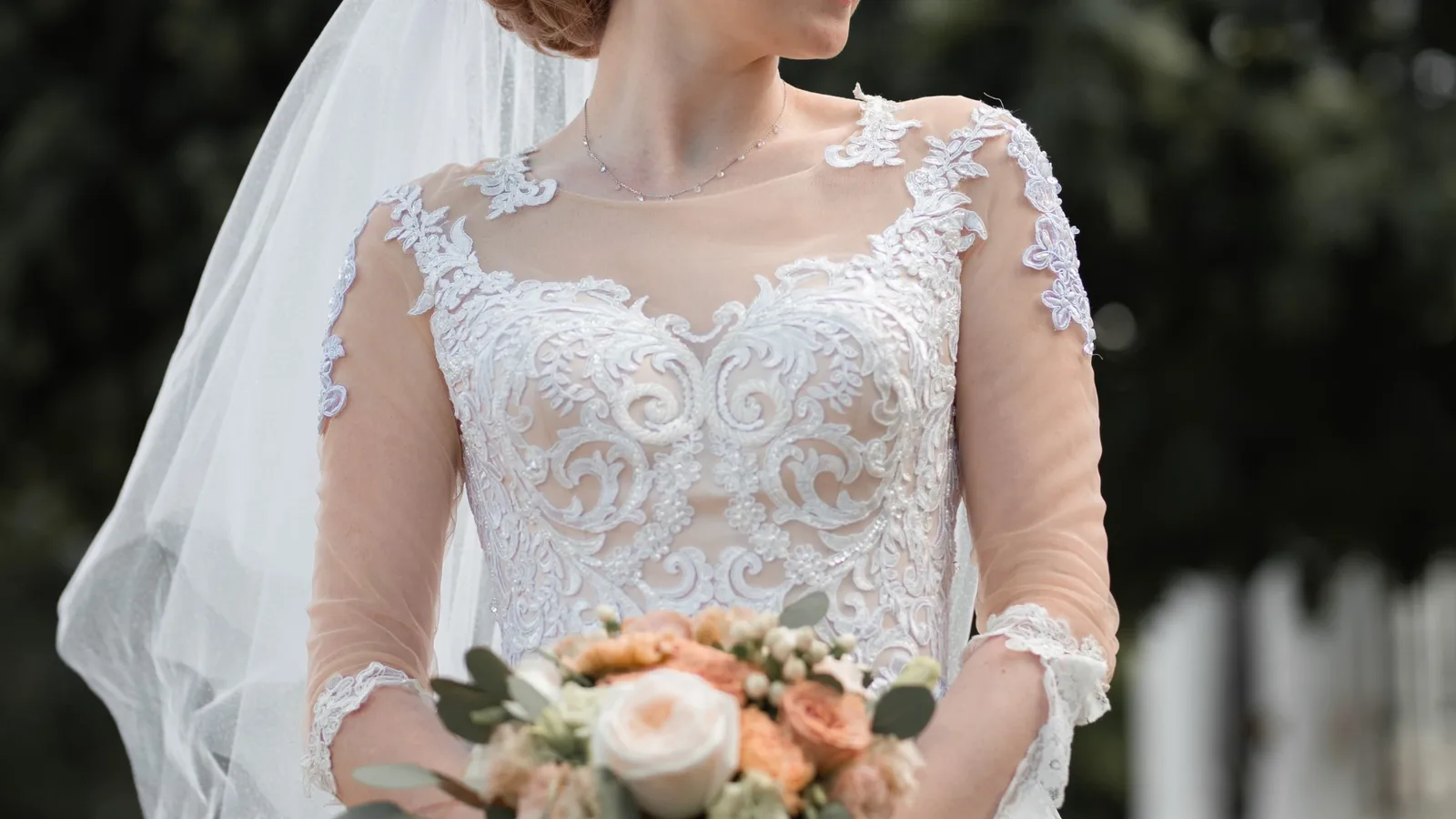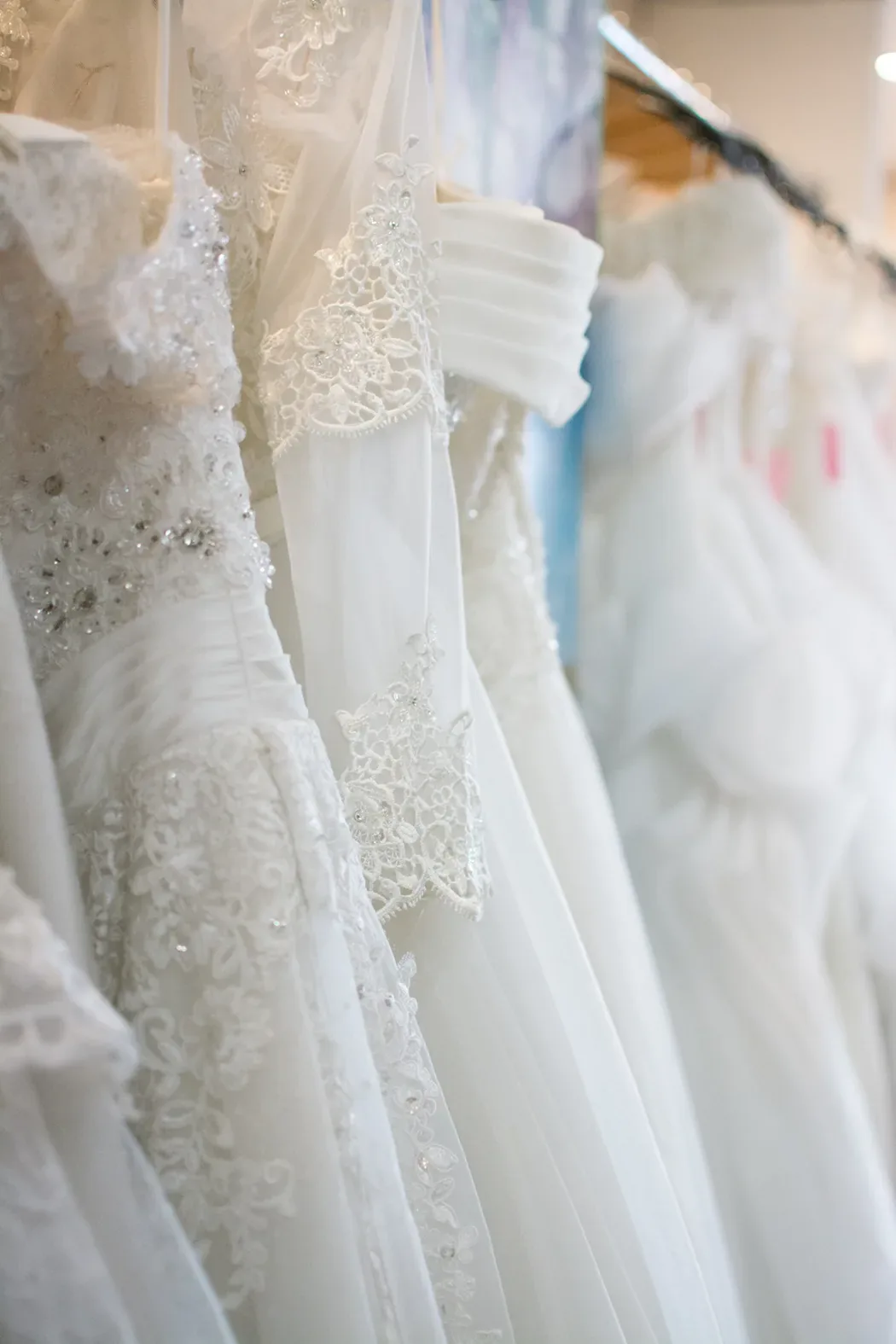
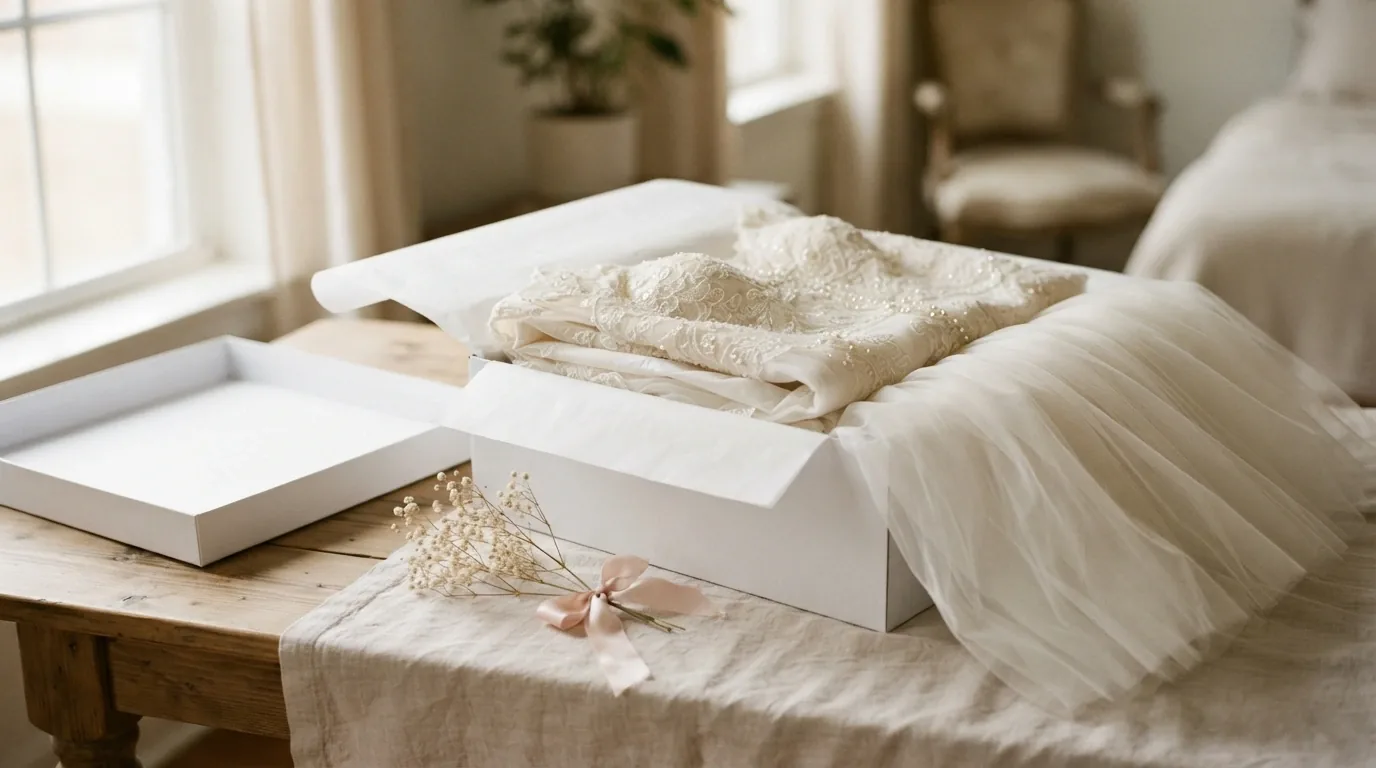
Imagine opening the box on your tenth anniversary. Or watching your daughter lift the lid for the first time. What you find inside depends on the choices you make in the weeks after your wedding.
A gown that is cleaned and stored with care can stay beautiful for decades. A gown that is stored in a hurry can turn yellow and crease in silence. This wedding dress storage guide shows you how to protect yours, step by step.
Why Does Long-Term Storage Damage Wedding Dresses?
Time works on fabric slowly, and most of the damage stays invisible until it is too late. Perspiration, body oils, and traces of champagne or cake remain in the fibers after the wedding, then oxidize into yellow or brown stains over months and years. Light fades color, humidity invites mildew, and the weight of a folded dress creates deep creases.
The good news is that every one of these problems has a simple answer. Proper preparation stops them before they start.
Five main threats put a stored gown at risk:
- Oxidation: Invisible stains from sugar, perspiration, and body oils turn yellow or brown over time.
- Light: Even indirect light fades color and weakens fibers season after season.
- Humidity: Damp air invites mildew, while very dry air can leave delicate fibers brittle.
- Pressure: Folds and stacked weight create permanent creases, especially in silk and satin.
- Pests: Moths and other insects feed on natural fibers, and they also seek out food residue left on fabric.
Each step below answers one or more of these threats, so you can see exactly why every detail matters.
Step 1: Have Your Dress Professionally Cleaned First
Clean the dress before anything else. Invisible stains keep oxidizing inside a closed box, so a gown stored uncleaned continues to change for as long as it sits there.
Professional cleaning removes the substances you cannot see. At San Diego Wedding Dress Cleaners, we inspect every gown, test the embellishments, and choose wet cleaning, dry cleaning, or a combination of both. Aim to bring your dress in within a few weeks of the wedding, since fresh stains lift far more easily than set ones.
Tell your cleaner everything you remember about the day. If champagne landed on the left side of the skirt, or a bouquet left pollen on the bodice, that detail helps us target the treatment. Even small spills matter, and a short note written the day after the wedding can make the cleaning more precise.
Step 2: Remove Everything That Does Not Belong to the Dress
Before storage, take off anything that can rust, stain, or pull on the fabric. Remove safety pins, hooks added for the day, fashion tape, and any tags. Detach the veil, belt, and other accessories, and store them separately.
Then check the hem and bustle for loose threads or small repairs. Fixing them now keeps small problems from growing quietly in storage.
Step 3: Choose the Right Materials
The materials that touch your dress matter as much as the place you store it. Look for acid-free tissue and an archival-quality box, since regular cardboard and standard tissue release acids that yellow fabric over time.
Avoid these common choices:
- Plastic garment bags: They trap moisture and can cause yellowing and mildew.
- Regular cardboard boxes: The acid in the material can transfer to the fabric.
- Hangers: A heavy gown on a hanger stretches the bodice and straps over time.
- Vacuum sealing: It compresses the fabric and can crush beading and lace.
Step 4: Fold Carefully With Acid-Free Tissue
Fold the dress with acid-free tissue between every layer, and pad the folds so they stay soft instead of sharp. Place extra tissue inside the bodice and sleeves to keep the shape. Give beaded and lace areas their own layer of tissue, so decorations do not rub against each other.
This is the step where professional preservation makes the biggest difference. In our Wedding Chest, we fold every gown by hand and place it in a breathable chest made from archival, museum-grade materials, so the structure holds and the details stay intact.
Step 5: Pick the Right Spot at Home
Store your dress somewhere cool, dry, and dark with a steady temperature. An interior closet or the space under a bed in a climate-stable room works well. Attics, basements, and garages swing between hot and damp, which is the worst combination for fabric.
Keep the box away from direct sunlight, perfume, and cleaning products. Place it on a shelf rather than on the floor, and never stack heavy items on top.
How Should You Store Different Wedding Dress Fabrics?
Every fabric reacts to storage in its own way, so a few small adjustments make a big difference.
1) Silk and satin:
These fabrics crease easily and show every fold. Soften each fold with rolled acid-free tissue, so the fabric bends gently instead of folding sharply. Keep silk away from light, since it weakens and fades more quickly than other fabrics.
2) Lace:
Lace snags on beads, hooks, and rough surfaces. Place a sheet of tissue between lace layers so the pattern never catches on neighboring fabric. Avoid hanging lace gowns, because their weight stretches the delicate net behind the pattern.
3) Tulle and organza:
These fabrics crush under pressure and lose their soft lift. Fold them loosely and stuff tissue into the volume of the skirt, so the layers keep their shape.
4) Beaded and sequined fabrics:
Beads and sequins scratch and pull on whatever sits next to them. Cover embellished areas with their own layer of tissue before you fold anything on top.
5) Crepe and heavier fabrics:
These hold their shape well, so use fewer folds and support the bodice with tissue. A gentle fold along natural seams helps the fabric rest without strain.
How Do You Store a Veil, Train, and Accessories?
Your veil and accessories need as much care as the dress, yet they often end up in a drawer. Treat them as part of the gown.
Wrap the veil in acid-free tissue and store it flat or in loose folds. Sharp creases in tulle are hard to remove later. Remove metal combs, clips, and pins, because they can rust or press into the fabric. Cover belts, sashes, and buckles with tissue so metal never touches the dress.
If your gown has a detachable train or an underskirt, clean it with the dress and store it in the same container. That way, every piece ages in the same conditions and stays together for the day you open the box.
Can You Store a Wedding Dress in a Cedar or Hope Chest?
Cedar chests look romantic, but they come with a catch. Cedar releases natural oils and acids that can discolor fabric over time. Wood in general can also give off compounds that affect fine textiles.
If you want to use a wooden chest, line it with acid-free tissue and a clean cotton muslin barrier, so the dress never touches the wood. Even then, a sealed archival container offers more reliable protection for long-term storage. Many brides keep the beautiful chest for display and store the gown inside an archival box.
How Often Should You Check on a Stored Wedding Dress?
Check it about once a year if you store it yourself. Open the box gently, look for yellowing, spots, or creases, and refold along new lines so no single crease stays in place for too long. Wash your hands first, or wear clean cotton gloves, so skin oils do not touch the fabric.
If you choose a sealed preservation chest, you can skip these checks. The chest is built to protect the gown without monitoring, which many brides find a relief.
How Long Can You Store a Wedding Dress?
With the right preparation, a wedding dress can last for decades. The key factors are professional cleaning before storage, archival materials, and stable conditions. Following this wedding dress storage guide gives your gown the strongest start on all three.
Home storage can work for many years, as long as you check the dress once a year and keep the environment steady. Without those checks, small problems such as yellowing, creases, or humidity damage can grow unnoticed. A sealed preservation chest extends that timeline further, because it controls light, air, and moisture without any effort from you.
Is a Preservation Chest Better Than Storing It Yourself?
For many brides, yes. Home storage can work well when you follow every step above and keep the conditions steady. A preservation chest removes the guesswork, because the materials, the folding, and the sealing are all handled by specialists who work with bridal fabrics every day.
If you plan to pass your dress down or keep it for decades, the chest is worth considering. If you only want to store it for a short time, careful home storage can be enough.
What If You Already Stored Your Dress Without Cleaning It?
Do not worry, because many brides do. Life gets busy after a wedding, and a dress often goes straight from the venue into a closet.
Start by leaving the dress alone. Avoid spot treating, washing, or steaming it at home, since those steps can set stains and cause new damage. Instead, bring the gown to a professional for an inspection, and tell them how long it has been stored and how you stored it. That information helps us choose the right method.
Results depend on the fabric and how long the stains have been there. However, yellowing often improves with professional cleaning, and cleaning now protects the dress from further change. If you want to learn what to avoid in the meantime, read our guide to common DIY wedding dress cleaning mistakes.
A Quick Checklist Before You Close the Box
- Clean the dress professionally
- Remove pins, tags, and accessories
- Use acid-free tissue and an archival box
- Fold with padding between every layer
- Store in a cool, dry, dark place
- Check once a year, or choose a sealed preservation chest
Give Your Gown a Gentle Rest
Your dress held one of the most important days of your life. A little preparation now lets it rest well, and lets you open the box years from now to find it as beautiful as you remember.
If you would like help, San Diego Wedding Dress Cleaners can clean, fold, and preserve your gown with care. Bring it in, and we will recommend the best way to store it.
Like this article?
Share on Facebook
Share on Twitter
Share on Linkdin
Share on Pinterest